Flag of the city of Mariupol
Photo source: WikipediaAs the southern outpost of the Donetsk region, this city became a crossroads of the Cossack freedom of the Kalmius Palanka, the unique culture of Greek settlers, and powerful metallurgical projects that formed the country's "steel heart." In the structure of regional memory, Mariupol emerges not just as an industrial center, but as a complex socio-cultural organism, where maritime romance, the high art of Arkhip Kuindzhi, and the tragic resilience of the defenders of Ukrainian statehood coexist simultaneously.
Coat of arms of the city of Mariupol
Photo source: WikipediaMariupol's status as a key logistical hub is secured by its strategic location at the mouth of the Kalmius River. The city is situated on the coast of the Azov Sea, which historically determined its development as a port center and a resort area. The city covers an area of 244 square kilometers, and its average elevation above sea level is 67 meters, providing a unique combination of steppe and marine landscapes.
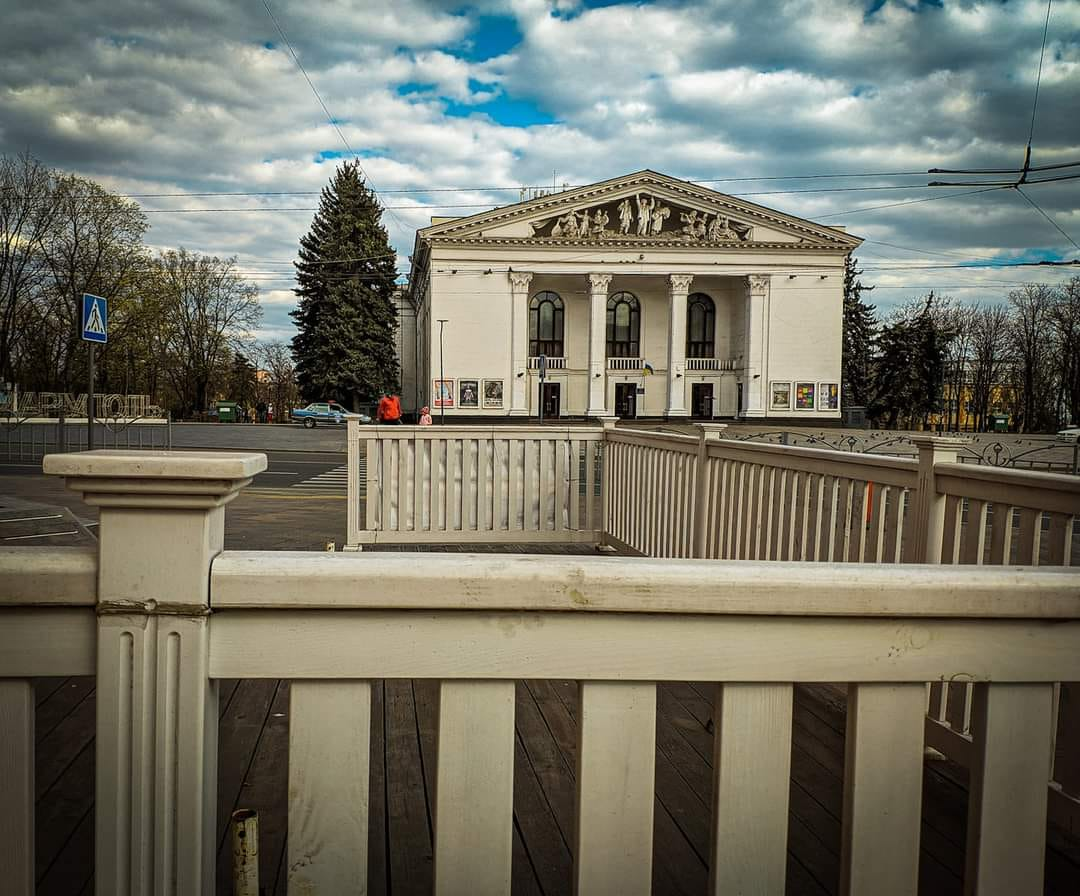 Photo author: Viktor Diedov
 General Information







Geographical and Technical Data




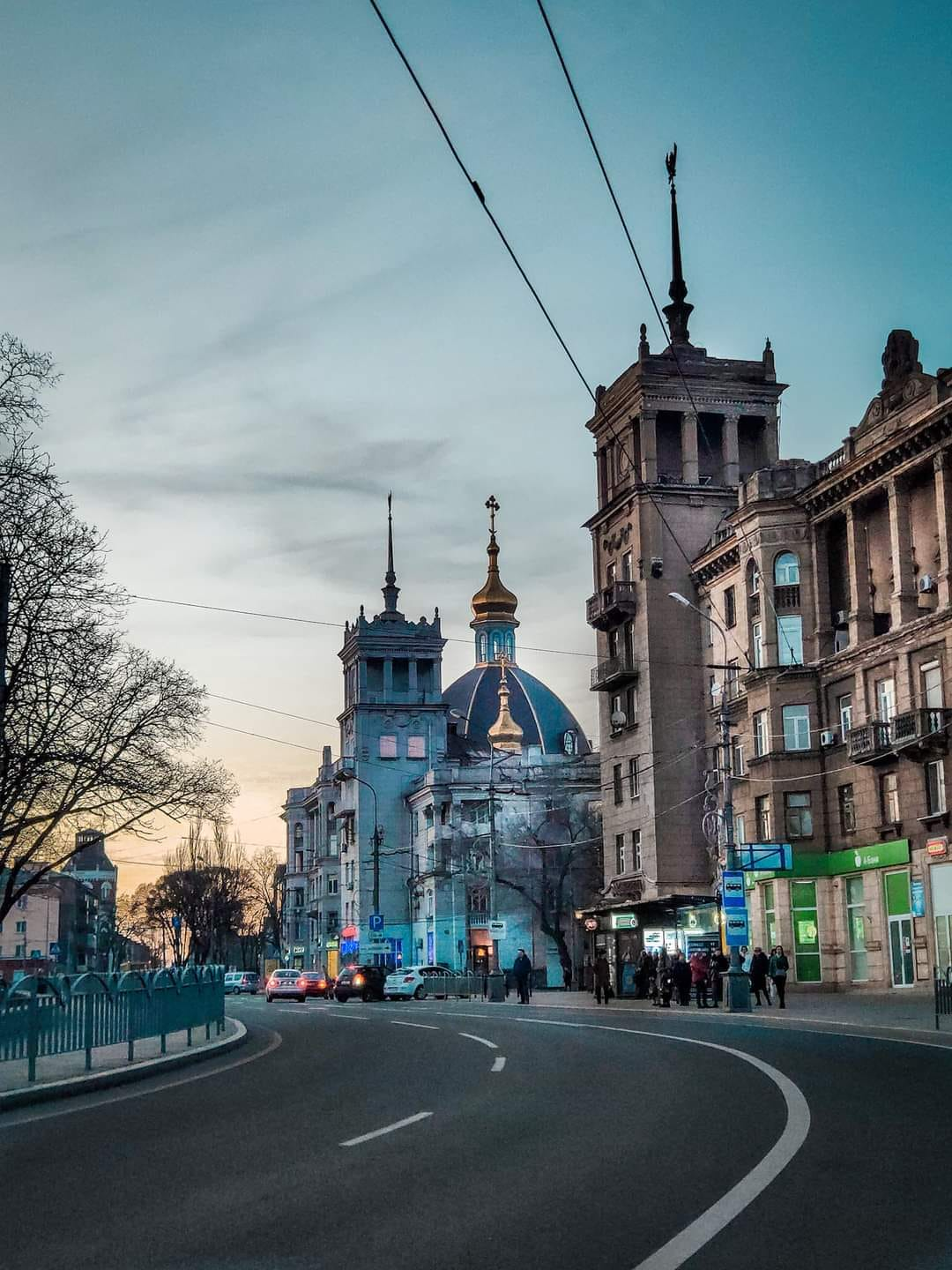 Photo author: Viktor Diedov
 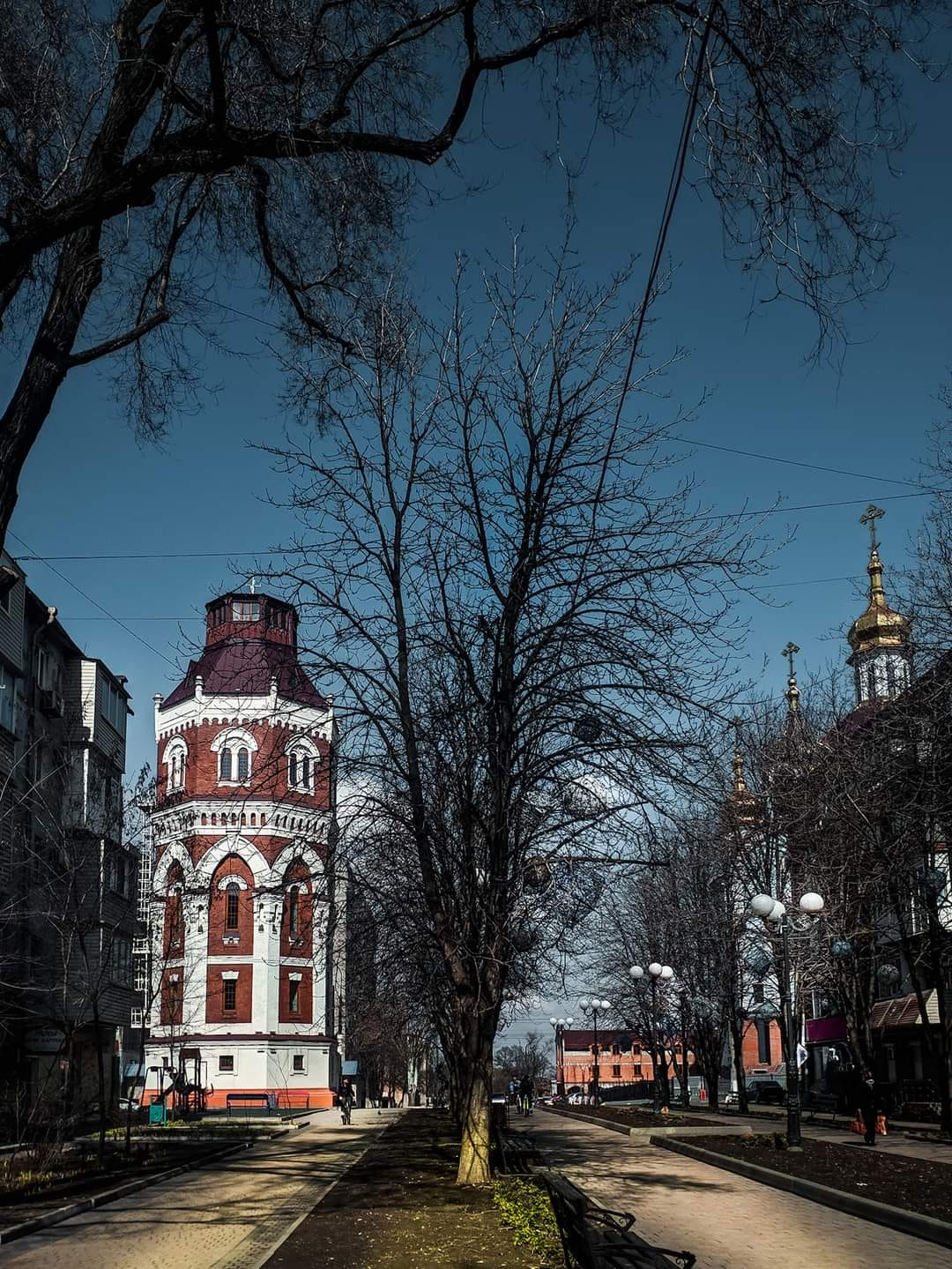 Photo author: Viktor Diedov
 Population
Mariupol. Old pier
Photo source: WikipediaIn 1611, it became the center of the Kalmius Palanka — the eastern outpost of the Zaporozhian Host. After the liquidation of the Sich in 1775, these lands were transformed into the Kalmius povit, and in 1778, the city of Pavlovsk was founded.
Map of Mariupol in 1826
Photo source: WikipediaA true demographic and cultural revolution took place in 1778–1780 during the resettlement of Christians (Greeks, Armenians, Georgians) from Crimea to the Azov region. Guided by Metropolitan Ignatius, they founded modern Mariupol, bringing the name "city of Mary" and Crimean toponymy to the surrounding villages. The city rapidly transformed into a major grain trading hub, which led to the opening of foreign consulates.
"Nikopol" factory in the city of Mariupol
Photo source: CM "Mariupol Local History Museum"At the end of the 19th century, the railway and the construction of a deep-water port (1889) opened the way for foreign investments. The establishment of the "Nikopol" and "Providence" factories transformed the merchant town into an industrial giant of European scale.
Azovstal in Soviet times
Photo source: facebook.com/evgeny.mushkin.5In the 1930s, the "Azovstal" metallurgical plant emerged on the left bank of the Kalmius, becoming a symbol of industrialization. During World War II, the city endured German occupation and the devastating tragedy of the destruction of its Jewish community, whose spiritual leader, Metropolitan Ignatius, rested in the Haralampiev Cathedral until its destruction. From 1948 to 1989, the city bore the name of the Soviet official Zhdanov; however, with the collapse of the USSR and the restoration of Ukraine's independence, it reclaimed its historical name.
Chumak Track in Mariupol
Canvas author: Arkhip KuindzhiThe art museum named after him housed a unique collection of documents, including metric books of his marriage to Vira Shapovalova and a copy of his birth certificate from 1841. Kuindzhi's work was deeply connected to the Azov region, which was reflected in his famous canvas "The Chumak Route in Mariupol" (1875).
Water tower
Photo source: UkrinformAnother cornerstone of the city's culture is the legacy of its urban architect, Victor Nielsen. Designed by him and erected in 1910, the 33-meter Water Tower stands as a twin to the one he previously built in Rybinsk back in 1899. The tower served a 21-kilometer water supply network and became an enduring symbol of engineering artistry.
"Houses with Spires" (1953)
Photo source: MRPL.CITYNielsen also built his private Art Nouveau house featuring a relief of a "crying nymph," dedicated to the memory of his daughter who died of typhus. The city also features the prominent "Houses with Spires" (1953) on Vyzwolennia (Liberation) Square. Built according to the design of Kyiv architect L. Yanovytskyi ("Miskbudproekt" Institute), they stand as a prime example of Stalinist Neoclassicism in the city. Both buildings are adorned with stucco work, pylons, and bay windows.
"Kestrel" mosaic (1967)
Creator: Alla HorskaSoviet mosaics from the Thaw period hold a unique artistic value. The "Kestrel" ("Boryviter") mosaic (1967) was created by the dissident artist Alla Horska in co-authorship with Viktor Zaretskyi for the interior of the "Ukraina" restaurant. When Soviet authorities ordered the work to be destroyed, the artists hid it behind a false wall, which allowed the mosaic to be rediscovered during renovations in 2008.
"Tree of Life" (1967)
Creator: Alla HorskaAnother of her works — "Tree of Life" — is also considered a pinnacle of monumental art. The "Metallurgists" panel is another signature landmark of Mariupol, while Viktor Ponomarov's mosaic "Tourism and Recreation," a beloved favorite for many, was located near the sea.
"Mariupol" T-shirt
Photo source: City of MaryFor Mariupol residents, the connection to the sea and labor is a source of immense pride. In 2016, Serhiy Rodionov, alongside type designer Andriy Shevchenko, developed the city's brand identity "#ТутВарто" ("#WorthItHere"). The logo seamlessly merges Yukhym Kharabet's anchor with a stream of molten steel from a metallurgical ladle. In the lettering, the characters "Р", "П", and "Л" are stylized with a subtle Greek influence, honoring the historic roots of the community.
State Higher Educational Institution "Priazovskyi State Technical University"
Photo source: PSTUBefore the war, Mariupol developed as a vibrant hub of higher education and culture. PSTU (whose first building was designed by Nielsen as a diocesan school) and MSU trained young specialists and fostered international cooperation, transforming the city into a showcase for successful European reforms in the Azov region.
"Azovstal" — the legendary giant and fortress of the Azov region
Photo source is missing or unpublished"Azovstal" Iron and Steel Works
It was founded on February 2, 1930, following the decision to construct a new plant at the mouth of the Kalmius River. For the construction of this giant, 292 million currency units were allocated from the budget. On the eve of World War II, the enterprise was setting world records: in May 1939, blast furnace No. 3 produced 1,614 tons of pig iron in a single day, and on August 5 of the same year, open-hearth furnace No. 5 with a capacity of 400 tons — the largest by capacity in Europe — went into operation. In the autumn of 1941, the equipment was evacuated to the Urals, and in 1943, the factories were blown up by retreating German troops.
"Azovstal" — the legendary giant and fortress of the Azov region
Photo source is missing or unpublishedFollowing a large-scale reconstruction in 1944–1945, the works became the first in the USSR to master the production of 25-meter railway rails, which would eventually lay two-thirds of the railroads across the former Soviet Union. In 1953, the plant began producing its own sinter, transforming into a full-cycle enterprise. A true marvel of engineering arrived in 1973 with the launch of the unique "3600" rolling mill, a massive project built with the collaboration of 214 factories from Germany, Poland, Hungary, England, and Austria.
"Azovstal". August 27, 2021.
Photo source: WikipediaBy 2022, "Azovstal" spanned an area of 11 square kilometers (equivalent to 4.5 times the territory of Monaco). The underground portion of the plant consisted of five levels with tunnels totaling over 20 kilometers in length. A system of 36 bomb shelters was built to accommodate up to 12,000 people. Before the full-scale invasion, the plant contributed up to 10% of Ukraine's GDP, had an annual capacity of up to 5 million tons of steel, and produced unique military-grade heavy plate steel with thicknesses ranging from 6.5 mm to 200 mm.
"Azovstal" — the legendary giant and fortress of the Azov region
Photos of the current full-scale invasion
Light in the basements of "Azovstal"
Photo source: Dmytro Kozatskyi (Orest)Destroyed workshops of the "Azovstal" plant
Photo source: Dmytro Kozatskyi (Orest)Satellite image of the destruction
Photo source: RBC-UkraineSmoke over the plant
Photo source: dw.comScale of destruction
Photo source: RBC-UkraineMariupol Metallurgical Plant — a high-tech flagship
Photo source: Mind.uaMariupol Metallurgical Plant
It was the third-largest metallurgical plant in Ukraine. The enterprise's production assets included a unique sinter plant with 12 sinter machines (capacity of 12 million tons of sinter), 4 blast furnaces (4.3 million tons), 3 converters (3.7 million tons), and rolling mills (Slabing 1150, Sheet Rolling Mill 1700).
Mariupol Metallurgical Plant — a high-tech flagship
Photo source: Radio LibertyIn the 2000s, the plant consistently demonstrated high performance, smelting up to 6 million tons of pig iron, 7 million tons of steel, and manufacturing 5.3 million tons of rolled products per year. Even in times of economic crisis, production remained robust: in 2013, it turned out 4.269 million tons of steel and 4.606 million tons of finished rolled metal, followed by 3.242 million tons of steel in 2018.
Mariupol Metallurgical Plant — a high-tech flagship
Photo source: gmk.centerIn November 2019, the enterprise finalized a large-scale reconstruction of its "1700" sheet rolling mill, investing 114 million USD, which boosted the production capacity of hot-rolled coils to 2.5 million tons per year. The plant employed over 14,000 workers.
Mariupol Metallurgical Plant — a high-tech flagship
Photos of the current full-scale invasion
Metallurgical plant: drone view
Photo source: MRPL.CITYDestroyed workshops of the plant
Photo source: SuspilneRailway on the plant territory
Photo source: TrybunEntrance to the metallurgical plant
Photo source: Hromadske RadioDestroyed workshops of the plant
Photo source: UKR.NETMariupol Sea Commercial Port — a gateway to the world ocean
Photo source: gmk.centerMariupol Sea Commercial Port
The largest port on the Azov Sea and one of the three most powerful in Ukraine, its potential cargo turnover amounted to 15 million tons per year. Prior to the events of 2014, the port consistently approached this milestone, transshipping raw materials and finished metallurgical products. Following the outbreak of the war in the Donetsk region, performance indicators temporarily declined, but leading up to the full-scale invasion, the port confidently reached a turnover of around 7 million tons.
Mariupol Sea Commercial Port — a gateway to the world ocean
Photo source: gmk.centerIn 2020, the port's cargo turnover reached 6.22 million tons (an increase of 449 thousand tons compared to 2019). Export volumes amounted to 5.26 million tons, while imports stood at 555 thousand tons (including 407.8 thousand tons of construction materials and 142.9 thousand tons of coal). Domestic coastal shipping of ferrous metals and coal totaled 388.3 thousand tons, resuming the coastal transit of slabs and pig iron to the Pivdennyi port.
Mariupol Sea Commercial Port — a gateway to the world ocean
Photo source: gmk.centerThe primary cargo destination countries were Italy (2.237 million tons), Turkey (1.422 million tons), the United Kingdom (315 thousand tons), Lebanon (86 thousand tons), Morocco (82 thousand tons), and France (81 thousand tons). The port operated a modern "UkrTransAgro" grain terminal, which was running at full capacity as late as February 23, 2022, preparing for shipments of the new season's grain.
Landmarks
Excavations of the Mariupol burial ground. 1930
Photo source: WikipediaThe Azov land conceals a centuries-old history of human civilizations. During archaeological excavations in 1930, which were conducted prior to the construction of Mariupol's first residential five-story building on Kamburov's plot of land, a unique pit-type vault was discovered in the historical center of the city. The burial, dating back to the middle of the 2nd millennium BC, belonged to people who were contemporaries of the Ancient Egypt era but lived on the shores of the Azov Sea. Inside the vault with a stepped roof, researchers found the skeletal remains of twelve individuals, everyday household items, as well as rare coins depicting a boat with a human figure inside it.
A fragment of a burial ground that is about 6,000 years old. An exhibit of the Mariupol Museum of Local Lore
Photo source: texty.org.uaA special place in the city's historical chronicle was occupied by the discovery of the Neolithic Mariupol burial ground, the age of which was estimated at approximately 6,000 years. This unique excavation section from the burial ground was discovered in the summer of 1930 during preparatory earthworks for the construction of the metallurgical giant "Azovstal". The find contained priceless anthropological material, but it was completely destroyed in March 2022 as a result of the bombings of the museum of local lore.
Landmarks
Mariupol Museum of Local Lore MRML
Photo source: Municipal Institution "Mariupol Museum of Local Lore"Founded in 1920 (officially opened in 1923 at the initiative of local residents), the Mariupol Museum of Local Lore was the oldest museum institution in the Donetsk region. Under the management of the city authorities, the museum complex on Heorhiivska Street united three prominent branches: the Museum of Local Lore itself (building No. 20), the Arkhip Kuindzhi Art Museum (building No. 58), and the Museum of Folk Life (building No. 55), which had been highlighting the culture and lifestyle of ethnic groups in the Azov region since 1989. The museum's total collection comprised over 50,000 priceless exhibits. In March 2022, the museum building on Heorhiivska Street—which had survived a fire in 1943 and was rebuilt by the "Zhdanovzhylbud" trust in 1962 according to a Hiprohrad project—was destroyed as a result of heavy shelling.
Landmarks
Arkhip Kuindzhi Art Museum
Photo source: Magnolia-TVThe museum opened in 2010 as the first stage of a major city arts initiative. It was housed in a unique historical building from 1902, constructed in the Northern Art Nouveau style, which once belonged to the estate of Vasyl Hiasyntov. Spanning ten halls across an area of 300 m², the museum's exhibition presented the extraordinary life and work of the prominent landscape painter Arkhip Kuindzhi. It preserved the oil sketches "Autumn. Crimea" and "Elbrus," as well as a study for "Red Sunset," which had originally been transferred from the Hermitage. A particularly sacred exhibit was the metal baptismal font from the former Church of the Nativity of the Blessed Virgin Mary, in which the future artist was baptized in 1841.
Arkhip Kuindzhi Art Museum
Photo source missing or unpublishedThe art museum's collection comprised over two thousand exhibits. Among them were paintings by Kuindzhi's contemporaries—Ivan Aivazovsky ("Off the Coast of the Caucasus") and Nikolai Dubovskoy—a sculpted bust of the master by Volodymyr Beklemishev, as well as works by prominent 20th-century Ukrainian artists including Tetiana Yablonska, Mykola Hlushchenko, Mykhailo Derehus, Serhiy Shyshko, Mykola Bendryk, Ivan Marchuk, and many local painters. A unique part of the repository included a collection of 19th- and 20th-century ex-libris and the medallic art of Yukhym Kharabet. On March 21, 2022, the museum building was completely destroyed by a direct hit from a Russian airstrike.
Arkhip Kuindzhi Art Museum
Photos before and during the current full-scale invasion
Arkhip Kuindzhi Art Museum
Photo source: DISCOVER.UAArkhip Kuindzhi Art Museum on canvas
Please note: The original photo originates from the information space of the aggressor state; therefore, a direct link to the resource is not published for security reasons.The occupying authorities removing valuable exhibits from the destroyed museum
Please note: The original photo originates from the information space of the aggressor state; therefore, a direct link to the resource is not published for security reasons.Mariupol Arkhip Kuindzhi Art Museum
Photo source: Svoi.CityPrior to Russia's full-scale war against Ukraine, the museum gladly welcomed visitors
Photo source: Ukraina MolodaLandmarks
Center for Contemporary Art
Palace of Culture of OJSC MMK "Azovstal"
Photo source: WikipediaThe elegant three-story "Continental" hotel was erected between 1887 and 1910 in the Eclectic architectural style. The first stage was built by the Italian entrepreneur Tomaso in 1898, and in 1910, a three-story wing featuring a lavish auditorium, a foyer, and technical facilities was added to the building. The hotel was considered the main hub of cultural life for Mariupol's intelligentsia, housing the city's first electrified printing house owned by the Goldrin brothers. Following World War II, the building served as the Palace of Culture for the "Azovstal" plant, and later became the "Molodizhnyi" Palace of Culture. In 2019, the "Hotel Continental" Center for Contemporary Art was opened within its walls. During the siege, the building's basement served as a shelter for hundreds of civilians, and on April 20, 2022, the palace burned down almost entirely as a result of artillery shelling by occupying forces.
"Hotel Continental"
Photos before and after the start of the full-scale invasion and occupation
Before April 25, 2022
Photo source: WikipediaAfter April 25, 2022
Photo source: Ukrainian InstituteLandmarks
Choral Synagogue of Mariupol, Mariupol, Heorhiivska, 18
Photo source: WikipediaFounded in 1882, the Choral Synagogue is one of the oldest Jewish heritage sites in Eastern Ukraine. The construction of the brick house of worship was facilitated by a Charter and the expansion of the rights of the Jewish community, whose first representatives arrived in the city in the 1820s. The synagogue was a Neoclassical brick rectangular building measuring 25x20 meters, featuring Doric pilasters, refined arches, and under-window panels. A forged iron fence on a high foundation with columns adorned with spheres separated it from the street. During the Nazi occupation of 1941–1943, the building was destroyed, and during the Soviet era, the surviving wing was utilized as a medical school facility and a tuberculosis dispensary. In the 1990s, the roof of the main building collapsed under the weight of snow, leaving only the facade walls and arched gates in a dilapidated state.
Landmarks
Gamper House
Photo source: Google MapsThis unique Neo-Gothic architectural monument consisted of two parts: a classical brick two-story mansion measuring 8x8 meters, built in 1897 by the merchant Shneiderovych, and a Neo-Gothic wing-castle annexed later. The construction and remodeling of the majestic house with a three-tiered pointed tower, lancet windows, and rich brick ornamentation were carried out at the initiative of the Gamper family. Serhiy Fedorovych Gamper, a prominent forensic medical expert and public figure, lived here and treated patients in the doctor's wing. Following the revolution, the building was transformed into a Soviet communal apartment building. The estate was heavily damaged and partially destroyed by a direct hit from an aerial bomb on April 12, 2022.
Gamper House
Photos before and after the start of the full-scale invasion and occupation
Gamper House
Photo source: Google MapsRussians targeted the architectural monument
Photo source: 0629.comLandmarks
City Garden. Inscription on the photo: City Garden. Founded in 1863.
Photo source: Monuments of UkraineThe oldest green heart of the city was established in 1864 on a picturesque hill overlooking the Azov Sea. The garden was a favorite promenade spot for the residents of Mariupol. It was here on July 15, 1875, that the first 100 kerosene lamps were installed to light the city lanes in the evening, a number that grew to 686 by 1914. A public bathhouse opened here in 1867, and the paving of adjacent squares and streets with cobblestones began in 1871.
Donetsk Academic Regional Drama Theater in Mariupol. Photo before February 24, 2022
Photo source: WikipediaOn March 16, 2022, aircraft of the occupying forces dropped two 500-kilogram bombs on the building of the Mariupol Drama Theater, where up to 1,000 civilians were sheltering. Despite the signs reading "CHILDREN" painted on the ground outside the building, the theater was destroyed. The death toll of this war crime remains unknown and is estimated to be between 300 and 600 people.
Mariupol Drama Theater Building
Photos of the destruction
Russia ceremonially opens the drama theater in Mariupol, where it killed hundreds of people
Photo source: SuspilneThe drama theater after the Russian strike
Photo source: Radio LibertyThe drama theater after the Russian strike
Photo source: RBC-UkraineThe drama theater after the Russian strike
Photo source: dw.comThe drama theater after the Russian strike
Photo source: Ukrainska PravdaDonetsk Academic Regional Drama Theater in Mariupol. Photo during the occupation
Photo source: The VillageSubsequently, the occupiers demolished the remnants of the building, pouring concrete over the bones of the victims and constructing new walls from red brick to conceal the evidence of the crime. This tragedy is the subject of the documentary play "Mariupol Drama" (premiered on September 16, 2022), which is based on eyewitness accounts.
Alla Horska's Mosaics
Monumental art pieces destroyed during the Russian occupation of Mariupol